
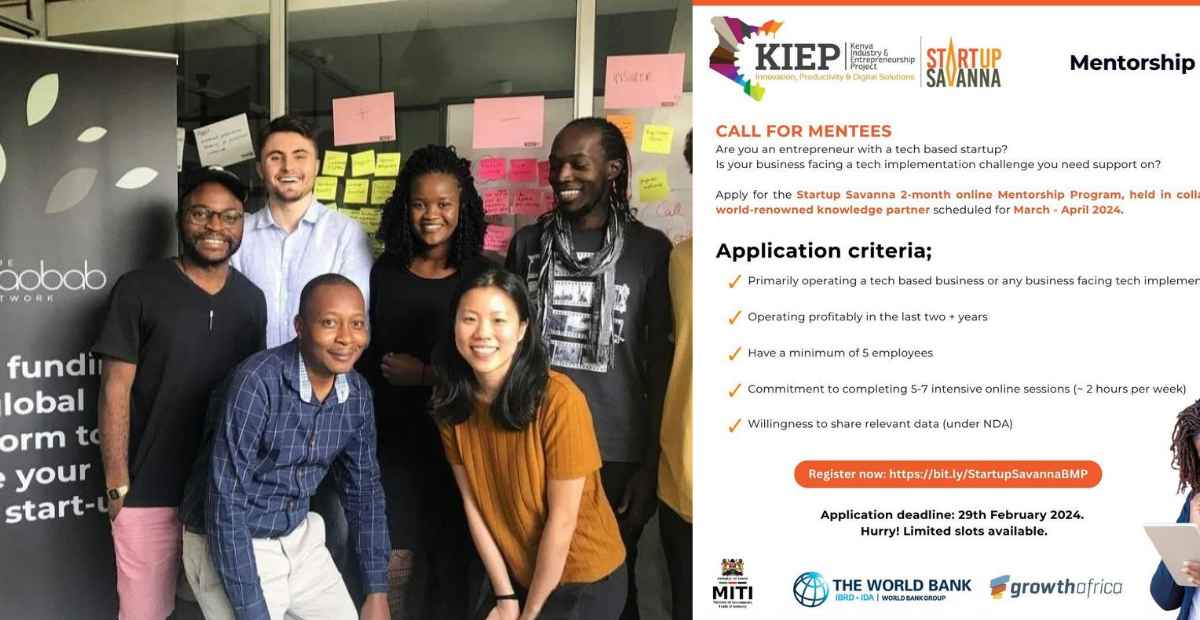
Starting a business can be exciting, but turning an idea into a successful company takes more than passion. Entrepreneurs need the right guidance, a strong business model, access to funding, and opportunities to connect with customers and investors. For founders building businesses in Kenya, startup accelerators and incubators can provide valuable support at different stages of the entrepreneurial journey.
Kenya has developed a strong entrepreneurial ecosystem, particularly in Nairobi, where technology, financial services, agriculture, healthcare, clean energy, and other innovative industries attract founders and investors. The country’s established mobile money ecosystem and growing technology sector have also helped create opportunities for startups developing solutions to local and regional challenges.
However, finding the right support program can be difficult. Some organizations focus on early-stage business ideas, while others support startups that already have customers and are preparing to expand. Some provide investment or grant opportunities, while others primarily offer mentorship, workspace, business development services, and access to industry networks.
This guide explores a range of startup accelerators and incubators in Kenya for 2026/2027, including organizations that support technology startups, social enterprises, agribusinesses, climate ventures, and women-led businesses.
Also check: List of Accelerators and Incubators for Startups in Zambia (2026/2027)
List of Accelerators and Incubators for Startups in Kenya (2026/2027)
The following organizations are worth exploring if you are looking for startup mentorship, business incubation, acceleration, technical support, or potential funding opportunities in Kenya.
1. Nailab
Focus: Entrepreneurship, technology and business growth
Nailab is one of Kenya’s established names in entrepreneurship support. It connects founders with mentors, structured learning, business development opportunities, and programs that may include funding.
Its current founder platform allows entrepreneurs to explore mentors, training, and supported programs. Funding depends on the specific opportunity and eligibility requirements.
Best for: First-time entrepreneurs, early-stage founders, and growing businesses looking for guidance and connections.
How to apply: Visit the official Nailab founder platform, create or explore a founder profile, and check available programs.
Before applying, prepare a clear description of your business, the problem you solve, your target customers, and the type of assistance you need.
2. iHub
Focus: Technology, digital products and innovation
iHub is a Nairobi-based innovation hub supporting technology entrepreneurs through mentorship, product development workshops, business support, networking, and connections across the technology ecosystem.
The organization has also participated in specialized initiatives, including education technology support. Its programs page describes opportunities for founders to access ecosystem connections and venture-funding networks.
Best for: Software startups, digital platforms, technology entrepreneurs, and founders building solutions for African markets.
How to apply: Visit iHub’s official programs page and check which initiatives are currently active. Some opportunities may target a specific industry, startup stage, or founder group.
3. GrowthAfrica
Focus: Business acceleration, strategy and investment readiness
GrowthAfrica is an enterprise acceleration organization headquartered in Nairobi. Its work has focused on helping ambitious businesses strengthen their strategies, improve management, pursue growth opportunities, and connect with investment.
The organization describes its approach as combining business acceleration, strategic advice, and access to investments.
Best for: Founders with an established business, evidence of market demand, and plans to expand.
How to apply: Visit GrowthAfrica and look for current acceleration programs or business advisory opportunities.
When preparing an application, demonstrate what your company has achieved so far, how it generates revenue, and what you intend to accomplish over the next 12–24 months.
4. Kenya Climate Innovation Center (KCIC)
Focus: Climate technology, agriculture, clean energy and circular economy
KCIC supports entrepreneurs developing businesses that address environmental and climate-related challenges. Its support includes business and technical expertise, facilities, market intelligence, partnerships, and access-to-finance opportunities.
KCIC’s portfolio includes initiatives in climate entrepreneurship, sustainable agriculture, waste innovation, and clean technology. Its programs page lists both open initiatives and completed programs, so applicants should check the status of each opportunity.
Best for: Green startups, agribusinesses, renewable-energy ventures, waste-management businesses, and climate-focused SMEs.
How to apply: Visit the official KCIC programs page and look for initiatives matching your business sector and stage.
Application tip: Explain the environmental or agricultural problem you are addressing, the commercial potential of your solution, and how you measure its impact. If you have already tested your product, include customer feedback and results.
5. Kenya National Innovation Agency (KeNIA)
Focus: Research commercialization and innovation development
KeNIA supports the development of Kenya’s innovation ecosystem, with a mandate that includes helping innovators commercialize ideas and strengthening the startup economy.
One relevant initiative is its Research to Commercialisation (R2C) Accelerator, an action-oriented training and coaching program intended to help research innovators turn innovations into commercially viable products and businesses.
Best for: Researchers, university innovators, science-based startups, and entrepreneurs commercializing intellectual property.
How to apply: Visit the KeNIA official website and look for the R2C Accelerator or other current innovation-support initiatives.
Applicants should be ready to explain the practical application of their innovation, its commercial potential, and the steps needed to move from research to market adoption.
6. JKUAT Incubation and Innovation Hub
Focus: University innovation, technology and enterprise development
The Jomo Kenyatta University of Agriculture and Technology (JKUAT) has an incubation and innovation hub associated with enterprise development and practical innovation.
A startup-funding landscape review identifies the hub as a source of business development services, workspace, internet access, administrative support, professional guidance, and mentorship. Specific services and admission conditions should be confirmed with the institution.
Best for: Student entrepreneurs, university-linked innovators, technology founders, and businesses requiring technical development support.
How to apply: Start with the JKUAT website and contact the relevant innovation or entrepreneurship office for current incubation arrangements.
If you are developing a physical product, agricultural technology, or engineering-based solution, explain what facilities or technical expertise you need to move toward commercialization.
7. Kenya Industry and Entrepreneurship Project (KIEP)
Focus: Innovation ecosystem development and business linkages
KIEP is particularly relevant because it supports the broader infrastructure that helps startups and small businesses grow. Its ecosystem-strengthening component, known as SKIES, is designed to build the capacity of incubators, accelerators, and technology bootcamp providers.
The project also works to strengthen links between startups, established industries, international networks, and academic institutions. Its support for ecosystem organizations should not be confused with an automatic direct grant to every startup.
Best for: Founders seeking programs delivered through eligible ecosystem partners, and incubators or accelerators exploring institutional support.
How to apply: Visit the official KIEP website and review the available components, beneficiary criteria, and application notices.
For founders, one practical approach is to identify an eligible incubator or accelerator that participates in a relevant KIEP-supported initiative and ask whether it has an active intake.
8. Antler East Africa
Focus: Pre-seed startups, founder teams and scalable innovation
Antler East Africa is a particularly relevant option for founders who want to build a company from the idea stage or accelerate an early-stage venture. Its Nairobi Founder Residency brings together founders for a structured, intensive program.
Antler’s published Kenya program describes a 10-week residency, mentorship, workspace, a global network, and potential investment of up to US$250,000 under its stated investment terms. Investment is selective and involves equity.
Best for: Ambitious founders building scalable technology or technology-enabled businesses, including people who have not yet incorporated a company.
How to apply: Visit Antler Kenya.
The published application process includes a founder application, interviews, and further discussions with the investment team. Applications may be submitted by individuals or existing teams, subject to the program’s criteria.
Important: Confirm the next residency dates and current investment terms before committing. The program is designed for founders who can dedicate substantial time to building their businesses.
9. Delta40
Focus: Climate technology, clean energy, mobility, fintech and data-driven ventures
Delta40 combines early-stage investment with hands-on venture building. Rather than providing mentorship alone, its team works alongside founders on areas such as commercial strategy, product development, fundraising, talent, and business operations.
The organization has a venture studio presence in Nairobi and supports founders building scalable businesses in areas including energy, agriculture, mobility, and fintech. Its model can involve building companies from the idea stage as well as supporting existing ventures.
Best for: Founders with deep knowledge of a problem in climate technology, energy, mobility, fintech, or related sectors who are prepared to build for significant scale.
How to apply: Explore Delta40’s venture-building opportunities.
Prepare to explain your sector expertise, the problem you want to solve, your initial evidence of demand, and why your proposed solution can grow across African markets. Delta40 is selective, and participation or investment is not automatic.
10. Madica
Focus: Pre-seed African technology startups
Madica is a structured investment and venture-support program for African startups, with particular attention to founders and markets that have historically received less venture funding.
Its published program offers up to US$200,000 in equity investment alongside a structured support period, mentorship, executive coaching, company-building guidance, and investor connections. Madica states that applications are accepted throughout the year, subject to its current eligibility requirements.
Best for: Early-stage founders with a minimum viable product (MVP), ideally some paying customers, and limited institutional funding.
How to apply: Visit the Madica program page.
Madica is not simply a business-plan competition. Applicants should demonstrate that they have a real product or a credible path to one, understand their market, and are committed to building a scalable company.
Review the investment agreement carefully to understand equity, governance, milestones, and the program’s expectations.
Comparison of Startup Accelerators and Incubators in Kenya
Choosing a startup program becomes easier when you compare organizations by their focus and the kind of support they offer.
| Organization | Main focus | Potentially suitable for |
| Nailab | Mentorship and business growth | Early-stage and growing ventures |
| iHub | Technology and digital innovation | Tech startups |
| GrowthAfrica | Business acceleration | Businesses preparing to scale |
| KCIC | Climate and green enterprise | Agribusiness and clean technology |
| KeNIA | Research commercialization | Research-based innovations |
| JKUAT Innovation Hub | University-linked incubation | Student and technical founders |
| KIEP / SKIES | Innovation ecosystem support | Startups through eligible partners |
| Antler East Africa | Founder residency and investment | Idea-stage and pre-seed founders |
| Delta40 | Venture building and investment | Climate, energy, mobility and fintech |
| Madica | Pre-seed investment | Early-stage African technology companies |
| Catalyst Fund | Climate resilience | Climate-focused technology startups |
| Villgro Africa | Health and impact innovation | Healthtech and eligible impact ventures |
| Baobab Network | Technology acceleration | Scalable technology startups |
| EldoHub | Regional innovation and entrepreneurship | Founders in western Kenya |
| LakeHub | Technology and skills | Regional technology entrepreneurs |
| Gearbox | Hardware and manufacturing | Physical-product startups |
| AkiraChix | Women in technology | Women seeking technology skills and networks |
| Chandaria Centre | University-linked incubation | Student and early-stage founders |
| The Land Accelerator | Land restoration | Regenerative agriculture and forestry |
| Ninja Accelerator Africa | Startup acceleration | High-growth ventures, subject to current calls |
The descriptions above are a starting point for choosing where to investigate, not a guarantee that every organization currently offers an open accelerator, investment, or grant.
Which Startup Accelerators in Kenya Offer Funding?
One of the most common questions entrepreneurs ask is where they can find startup accelerators in Kenya that provide funding.
The important distinction is between organizations that directly invest in startups and organizations that provide mentorship or connect entrepreneurs with external funding opportunities.
Here are several options worth investigating.
Antler East Africa
Antler publishes investment terms of up to US$250,000 for qualifying startups, comprising an initial investment and potential additional capital subject to its stated terms. The investment involves equity.
Website: antler.co/location/kenya
Madica
Madica’s published program offers up to US$200,000 in equity investment, together with structured venture-building support for eligible African startups.
Website: madica.vc
Catalyst Fund
Catalyst Fund states that it invests US$200,000 in pre-seed startups working on climate adaptation and resilience solutions.
Website: thecatalystfund.com
Delta40
Delta40 combines early-stage capital with hands-on venture building for selected founders. The funding structure and suitability depend on the opportunity and the venture.
Website: delta40.com
GrowthAfrica
GrowthAfrica focuses on business acceleration, strategic advice, and facilitating access to investment. The amount and availability of capital depend on the program and investor relationships.
Website: growthafrica.com
Are there equity-free startup funding opportunities in Kenya?
Yes, but you need to distinguish grants from investment.
- Grants: Usually do not require giving up company equity, but recipients must satisfy eligibility rules and may have to meet reporting and spending requirements.
- Equity investment: Investors receive a share of the company in exchange for capital.
- Debt financing: Funds must generally be repaid, potentially with interest.
- In-kind support: May include equipment, workspace, software credits, training, or professional services rather than cash.
KCIC and other ecosystem organizations periodically run specialized initiatives that may include financial or technical support. Nailab also lists grant opportunities through certain funded programs. These opportunities are program-specific, so check whether the support is a grant, an investment, or another form of assistance.
Conclusion
Kenya offers a range of startup-support opportunities, from early-stage incubation and technology hubs to investment-backed accelerators and specialized programs for agriculture, climate innovation, healthcare, and research commercialization.
For founders who are still developing an idea, incubation and founder-residency programs can help turn that idea into a viable business. Entrepreneurs with an existing product and evidence of demand may benefit more from accelerators that focus on commercial growth, fundraising, and strategic partnerships.
The key is to choose a program that fits your current stage, industry, and long-term goals. Prepare a compelling application, demonstrate what you have learned from customers, and review the program’s terms carefully before accepting an offer.
YOU MAY ALSO LIKE:
List of Accelerators and Incubators for Startups in Seychelles (2026/2027)
List of Accelerators and Incubators for Startups in Somalia (2026/2027)
List of Accelerators and Incubators for Startups in South Sudan (2026/2027)
List of Accelerators and Incubators for Startups in Tanzania (2026/2027)
List of Accelerators and Incubators for Startups in Uganda (2026/2027): Funding & How to Apply
List of Accelerators and Incubators for Startups in Zimbabwe (2026/2027)
Top Startup Accelerators in South Africa (2026/2027): Funding, Equity & How to Apply
Top Startup Accelerators in Singapore (2026/2027): Best Programs, Funding & How to Apply